
You are currently browsing the tag archive for the ‘Culture’ tag.
THE LIGHT SHOW 2009, Light Sculpture Exhibition
Thu 16 Apr to Sun 3 May, 11am to 7pm at The Annexe Gallery
The Light Show 2009 presents an assortment of lights and light installations made from recycled/found objects to humour, cajole and inspire.
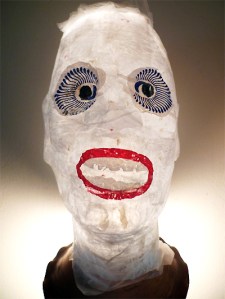 Inspired and motivated by their respective interests and disciplines, the participants of TLS09 are bound by the commitment to be “greener” and kinder to our environment. And who says green can’t be beautiful?
From PET bottles to milk cartons, plastic shopping bags to drinking straws, phased out incandescent light bulbs to old-skool cola bottles, these everyday materials have been rescued, re-used and re-imagined as light sculptures inspired by marine life-forms, whimsical one-off items, useful objects and many more.
read more on The Annexe website
Related posts
At the finale of the Stylo Kuala Lumpur Fashion Festival held last week, the designer Edric Ong was accorded the Mercedes Benz Stylo Award for Heritage for his collection and designs that best reflects the cultural heritage of Malaysia.

Edric Ong has been promoting Sarawak indigenous craft with the Atelier for over twenty years. He uses natural fibers and natural dyes in his fashion collections and works closely with some skillful craft persons from the Iban community. His work contributes to the appreciation and promotion of Pua Kumbu in Malaysia and worldwide. http://edricong.com/
We are very proud of you Edric and very happy.
I need to hurry to write a post about your fabulous work.

Catherine Bossis, 6th april 2009
The official opening of Gopeng’s community-based ‘history and culture centre’ on World Heritage Day 2009, 18 April is another milestone in Perak Heritage.
Gopeng is a pioneer tin-mining town of the Kinta Valley , 15km south of Ipoh , the capital of Perak state. Inhabited by communities of Orang Asli, Malays, Chinese, Indians and Sikhs, this old town has many stories to tell.

The ‘Gopeng history centre‘, yet to be officially named in English, is located at No.28, Jalan Eu Kong, in a row of double-storey brick shophouses built in 1887 by Eu Kong. Eu Kong is the founder of the pharmaceutical empire, Eu Yan Sang, which has its beginning in Gopeng.
Last year, local-born-and-bred Bernard Yaw commenced restoration of the shophouse, their ancestral home. Now, its upper floors provide a living space and rooms for his family for when they ‘come home’. The ground floor becomes the Gopeng history centre, which is devoted to the promotion and appreciation of local history, and its hometown heritage.
The centre is the initiative of local residents led by Bernard Yaw. It is home to a non-governmental organization to be named Pertubuhan Pengurusan Muzium Gopeng, registration pending, with a small select committee of locals chaired by Yaw. A local historian, Mr Phang Sai Hong has created a permanent exhibition of historical images and a wide range of historical objects. A former teacher, Phang wants to focus on the history of this ‘town of tin and rubber’, passing onto the young the knowledge of his hometown.
A lack of town planning has caused the corrosion of the town’s heritage. Knowledge of its history can help to reverse its decline and revive the town. Already, eco-tourism in the jungle nearby, ancestral home of the Orang Asli, has made Gopeng a popular destination. A history centre will provide a focal interest in Gopeng town, where local communities can share their hometown with visitors. Increasing economic activities will benefit local traders and service providers.
The people of Gopeng take pride in their hometown. They identify with the place with cherished memories. Gopeng is primed for hometown heritage.
The Perak Heritage Society (PHS) supports hometown heritage and the efforts of the Gopeng history centre in creating a space for the appreciation of the town’s history, for both locals and visitors. We hope that other shophouse owners in Gopeng will get inspired to renew their buildings and put it to economic uses, to create employment opportunities to the young and stop the drain of human resources.
On this day, various heritage sites in town will share the joy of the occasion and welcome visitors. The PHS will offer a self-guide map to Gopeng with walking trails (at minimal cost), as well as guided walk on request for a donation yet to be set.
The official opening ceremony begins at 10 am. It will be followed by light refreshments for invited guests, then a guided walk. Poster : gopeng-cameron-highlands-trek-april-09
Law Siak Hong
President of the Perak Heritage Society
Related posts
Where to stay : Gopeng Rainforest Resort
Want to see a Rafflesia after : SEMAI of Ulu Geroh
Who they are and what they do
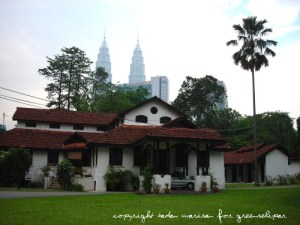
“Giving our past a future” is Badan Warisan Malaysia‘s motto. Badan Warisan Malaysia (the Heritage of Malaysia Trust) is the leading heritage conservation NGO in Malaysia.
It was set up in 1983 by a group people who were concerned about the rapid change taking place in the built environment. Their work involves advocacy, research and development and education.They also undertake physical conservation projects as well as manage two centres.
The Heritage Centre in Kuala Lumpur is a restored colonial bungalow with exhibition, seminar and meeting facilities and a specialist Resource Centre.
Read the rest of this entry »
One of Malaysia’s most incisive historians, Dr Farish Noor continues his OtherMalaysia Public Lecture Series with another thought-provoking installment. The blight of postcolonial national histories is the tendency to accept nation-state boundaries as a given and to write national histories that remain confined within fixed political-territorial limits. So there remains the tendency to see India (and South Asia) as something distinct and alien to Malaysia. A closer look at the history of South and Southeast Asia, however, reveals a longer period of trans-oceanic contact and exchange where Indians, Malays, Sumatrans and Javanese were part of a greater trans-oceanic civilisation where both South and Southeast Asia were connected via the routes of the Indian Ocean. This is a call for an appreciation of our collective past, and to re-think our concepts of national identity today.
Sat 14 Feb, 4.30pm at The Annexe Gallery
Admission Free


 Responsible Tourism and Travel in Malaysia